
In today’s automation and robotics scene, the necessity of components that allow movement cannot be emphasized. Devices that translate energy into mechanical motion at the core of this movement provide exact job execution and control. Their importance goes beyond simple movement; from industry to healthcare, they are fundamental for the performance, efficiency, and efficacy of automated systems across many sectors.
Table of Contents
The Importance of Actuators in Robotic Systems
Actuators are robots’ mechanical muscles, delivering the force and movement required to complete tasks ranging from simple to complicated. They convert electrical impulses into motion so that robots can interact with their surroundings. The whole performance of a robotic system can be much influenced by the reaction speed and precision of an actuator to control signals. In manufacturing contexts, exact movement is essential, particularly when handling fragile components or completing complex assembly jobs. The high degree of command execution by an actuator guarantees the effective functioning of the system, therefore lowering the danger of mistakes and raising production.
Actuators and Control Systems in Automation
Automation and robotics also depend on the interplay of actuators and control systems. Modern robotic systems often create a closed-loop control system by using advanced algorithms and sensors to provide actuators feedback. Real-time modifications made possible by this feedback system help the robot to react to changes in its surroundings or variations in job requirements. A robotic arm equipped with sensors can detect the weight of an object it is about to lift and adjust the force generated by its actuator. This adaptability enhances the robot’s ability to perform a variety of actions in changing situations, making it a versatile tool for a variety of applications.
Different Types of Actuators in Robotics
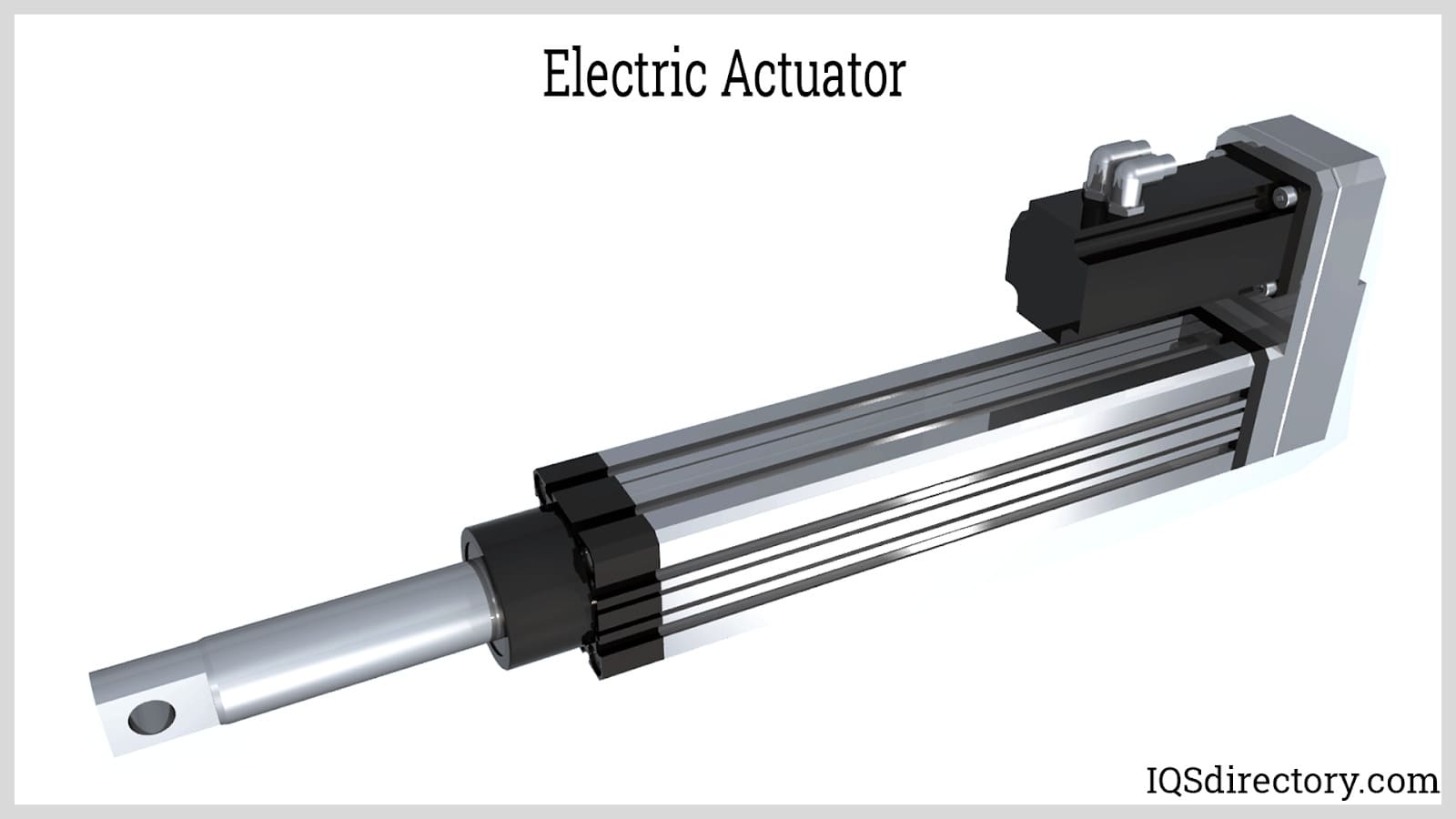
Robotics use a variety of actuators, each with unique characteristics appropriate for certain tasks. Electric actuators are widely used in a variety of applications due to their simplicity, ease of control, and ability to provide precise positioning. They are commonly seen on robotic arms, conveyor systems, and automated machinery. Pneumatic and hydraulic actuators, on the other hand, are chosen due to their ability to generate powerful force in tiny amounts, making them ideal for applications requiring heavy lifting or rapid movement. The choice of actuator has a significant impact on the design and functioning of a robotic system, highlighting the importance of careful consideration throughout the development stage.
The Impact of Smart Technology on Actuators
The integration of modern technologies, such as artificial intelligence and machine learning, has expanded the importance of actuators in automation and robotics. Sensors and connectivity features enable smart actuators to interpret data and make decisions depending on their environment. More complex behaviors and interactions made possible by this capacity let robots do jobs requiring more degree of autonomy. For example, smart actuator-equipped robots can learn from previous experiences and modify their motions depending on prior performance, therefore improving job execution constantly.
Future Trends in Actuator Technology
The demand for inventive actuator solutions is expected to grow as businesses increasingly adopt automation. The development of small actuators with improved efficiency and performance opens up new applications in industries such as consumer electronics and medical equipment. Top-rated actuators are utilized in medical robotic surgical systems to provide accurate motions in delicate procedures. Actuators enhance consumer electronics by enabling touchscreens and automated controls, resulting in better user experiences. Continuous research and development in actuator technology is likely to result in ever more advanced capabilities, thereby broadening the possibilities in robotics and automation.
Actuators and Environmental Sustainability
The environmental effect of actuators is getting attention as sustainability becomes a top focus in many businesses. An actuator’s efficiency directly affects the energy consumption of a whole robotic system. The development of energy-efficient actuators that lower power consumption while preserving performance is therefore becoming increasingly important. This trend fits worldwide initiatives to reduce carbon footprints and advance greener technology. In order to improve actuator sustainability and guarantee that automation helps to meet environmental objectives, researchers and engineers are investigating different materials and creative ideas.
Conclusion
Actuators play several different functions in robotics and automation and are thus essential for the operation of contemporary systems. They enable mobility, help to simplify complicated interactions, improve safety, and support the sustainability and economy of operations. Actuators will stay at the forefront of developments in automation as technology develops, inspiring creativity and allowing fresh uses in many different fields. Their capacity for adaptation, learning, and integration with cutting-edge technology will define robots’ future and thus make them indispensable parts of the continuous development of automated systems.
