
When working with machines, choosing the right type of bearing is very important. It can affect how well the machine works, how long it lasts, and how efficient it is. But with so many options, how do you know which one to pick? This guide compares sleeve bearing vs ball bearing, explaining their pros, cons, and best uses to help you choose the right one for your machine.
Table of Contents
What Are Sleeve Bearings?
Sleeve bearings, also known as plain bearings or bushings, are simple, tube-shaped parts that help two surfaces move smoothly by sliding or rotating against each other. They hold and support a spinning shaft and work by sliding instead of rolling. Because of this, they need lubrication—like oil or grease, to reduce friction, prevent wear, and keep everything running smoothly.
How Sleeve Bearings Work
In sleeve bearings, the shaft spins inside the sleeve, and the two surfaces slide against each other. A thin layer of lubricant (like oil or grease) sits between the shaft and the bearing, preventing metal parts from rubbing directly against each other. This lubricant lowers friction, helps carry away heat, and reduces wear, allowing the bearing to work well over time.
Common Materials Used
The material chosen for a sleeve bearing depends on the load it needs to carry, how fast it spins, temperature, and other conditions. Typical materials include:
- Bronze: Strong, wears well, handles heat, and resists corrosion—good for moderate loads and speeds.
- Plastic (like PTFE or Polyamide): Low friction, resists corrosion, and often lubricates itself—ideal for lighter loads and medium speeds.
- Composite Materials: Mix metals and plastics to combine strength, wear resistance, and self-lubrication—used in many different situations.
- Steel or Stainless Steel: Very strong and durable, used when high strength and wear resistance are needed.
What Are Ball Bearings?
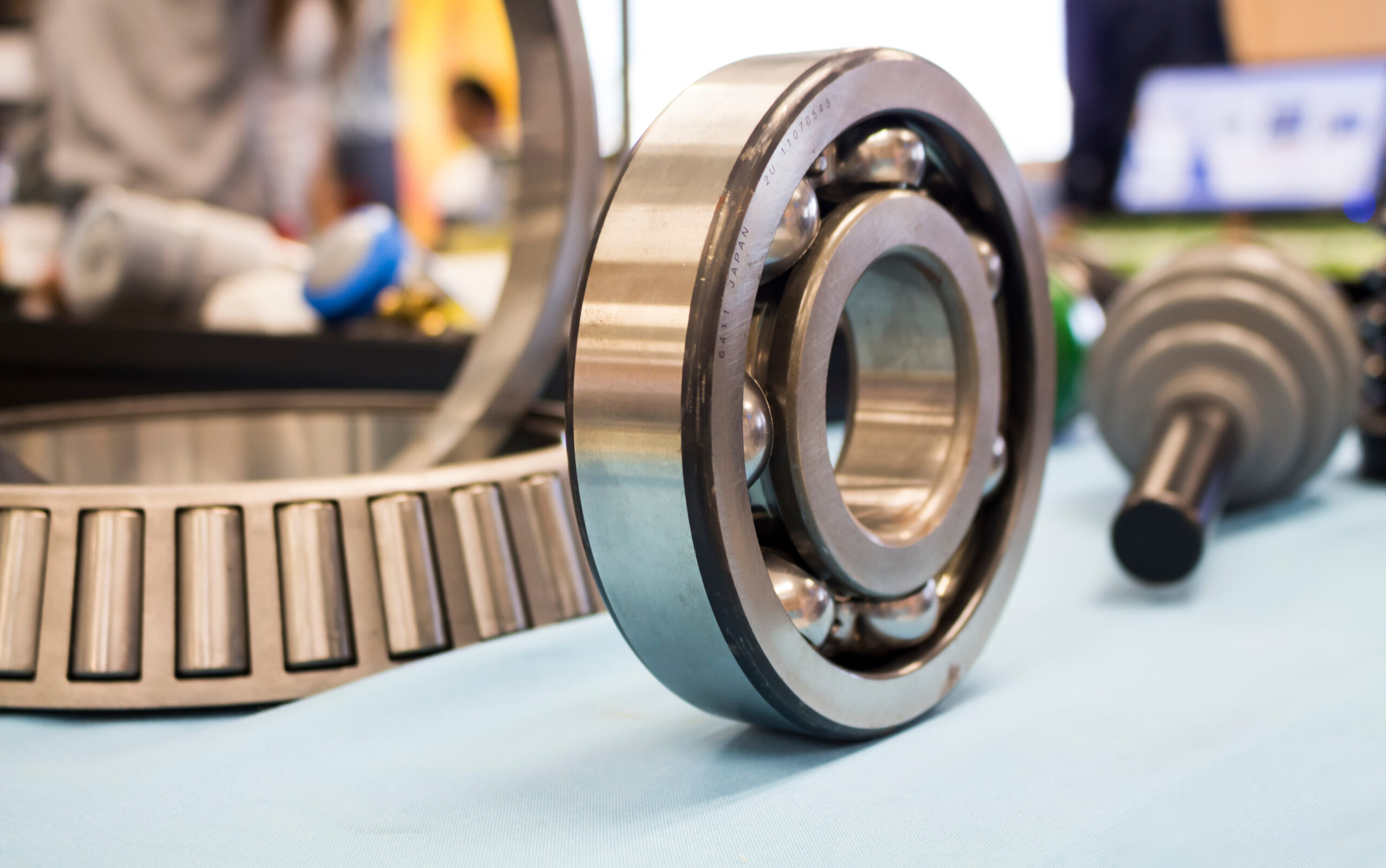
A ball bearing is a type of rolling bearing that uses small spherical balls to reduce friction and support loads when things rotate. It has two rings called races — one inside and one outside — with the balls rolling between them. Usually, one race is fixed in place, and the other spins with the shaft or hub. Rolling balls reduce friction better than sliding surfaces.
The main parts of a ball bearing are:
- Inner Race: The ring that fits snugly on the shaft.
- Outer Race: The ring that fits into the motor or housing.
- Balls: The rolling spheres that carry the load and reduce friction.
- Cage: A frame that keeps the balls evenly spaced and stops them from hitting each other.
They help the shaft spin smoothly by reducing friction and wear.
How Ball Bearings Work
Ball bearings reduce friction by rolling balls between the inner and outer rings. They can support radial (side) and axial (along the shaft) loads.
- Radial loads: Forces pushing perpendicular to the shaft.
- Axial loads: Forces pushing along the shaft’s length.
This design lets the bearing handle loads while allowing the shaft to rotate smoothly, even at high speeds, with less heat buildup.
Common Materials and Construction
Ball bearings are made from different materials depending on what they need to do:
- Chrome Steel (52100) is a widely used, strong metal for bearings. It resists wear and performs well at high speeds. However, it can rust if not properly cleaned and protected.
- Stainless Steel (440C) doesn’t rust and can stay strong in wet or rough places, so it’s great for harsh conditions.
- Ceramics like Silicon Nitride are light and very strong. They can handle fast speeds and hot temperatures. They are often used in special bearings that have ceramic balls inside metal rings.
- Plastics like PTFE or PEEK are light and don’t rust. They work well for light loads and places where it’s hard to add oil or grease.
Ball bearings come in different types like:
- Deep groove ball bearings handle loads from the side and along the shaft, making them versatile for many common applications.
- Angular Contact Ball Bearings are made to handle strong pushes along the shaft in one direction. They are often used in machines that need precise and fast movement.
Detailed Comparison: Sleeve Bearing vs Ball Bearing
When comparing sleeve bearings and ball bearings, it’s essential to understand their distinct characteristics, advantages, and limitations. Here’s a detailed comparison to help you make an informed decision:
1. How They Work
- Sleeve Bearings: A smooth, tube-like sleeve holds and supports the shaft, while lubrication helps the shaft slide easily inside the sleeve.
- Ball Bearings: Small metal balls roll between two rings (called races), making movement smoother with less friction.
2. Lifespan
- Sleeve Bearings: Last about 10,000 to 70,000 hours. Shorter life in hot or dusty conditions.
- Ball Bearings: Last up to 70,000 hours or more. Handle heat and stress better.
3. Noise
- Sleeve Bearings: Quieter at low speeds, but can get noisier as the lubricant wears out.
- Ball Bearings: May make more noise at low speeds, but stay quiet and reliable at high speeds.
4. Mounting Flexibility
- Sleeve Bearings: Work best when mounted horizontally. Vertical ups can cause faster wear.
- Ball Bearings: Can be mounted in any direction — horizontal, vertical, or angled — with no issue.
5. Temperature Resistance
- Sleeve Bearings: Good up to about 70°C (158°F). Higher temperatures can break down the lubricant.
- Ball Bearings: Handle up to 120°C (248°F) or even more with the right materials.
6. Maintenance
- Sleeve Bearings: Require regular lubrication and can be easily affected by dirt.
- Ball Bearings: Often sealed, so they need less maintenance and are better protected.
7. Cost
- Sleeve Bearings: Cheaper upfront. Great for cost-sensitive projects.
- Ball Bearings: They might cost more upfront, but last longer and perform better, saving you money in the long run.
Which One Should You Use?
Go with Sleeve Bearings if:
- Your machine runs slowly and cool
- You need it to be quiet.
- You’re working with a tight budget.
- The setup is horizontal only.
Choose Ball Bearings if:
- You need to run at high speed or temperature.
- You want long life and durability.
- The equipment could be mounted in any direction.
- You want low maintenance.
Pros and Cons
Here are the pros and cons of sleeve bearings and ball bearings to help you choose the right one for your needs:
A. Sleeve Bearings
Pros
- Cost-Effective: Cheaper to make and buy — great for tight budgets.
- Quiet Operation: They are quiet, especially at low speeds, because they don’t have rolling parts.
- Simple Design: Fewer parts make them easy to install and maintain.
- Good at Dampening Vibration: Can absorb vibrations better than ball bearings in some setups.
Cons
- Shorter Lifespan: Wears out faster, especially under heavy loads or high speeds.
- Orientation Limits: Works best horizontally. If mounted vertically, the lubricant may not spread evenly.
- Needs Regular Maintenance: Must be lubricated often to avoid wear and overheating.
B. Ball Bearings
Pros
- Handles High Speeds Well: Designed to spin fast with less friction.
- Long-Lasting: Typically lasts longer if properly used and maintained.
- Versatile Load Handling: Can handle both radial (sideways) and axial (end-to-end) loads.
- Low Maintenance: Often sealed and pre-lubricated, so they need less attention.
Cons
- More Expensive: They cost more because of their more complex design.
- Can Be Noisy: May get louder over time, especially as they wear.
- Sensitive to dirt: Damaged seals let dirt in, harming the bearing.
Understanding these pros and cons can help you make the best choice based on your machine’s speed, load, mounting orientation, maintenance needs, and budget.
