
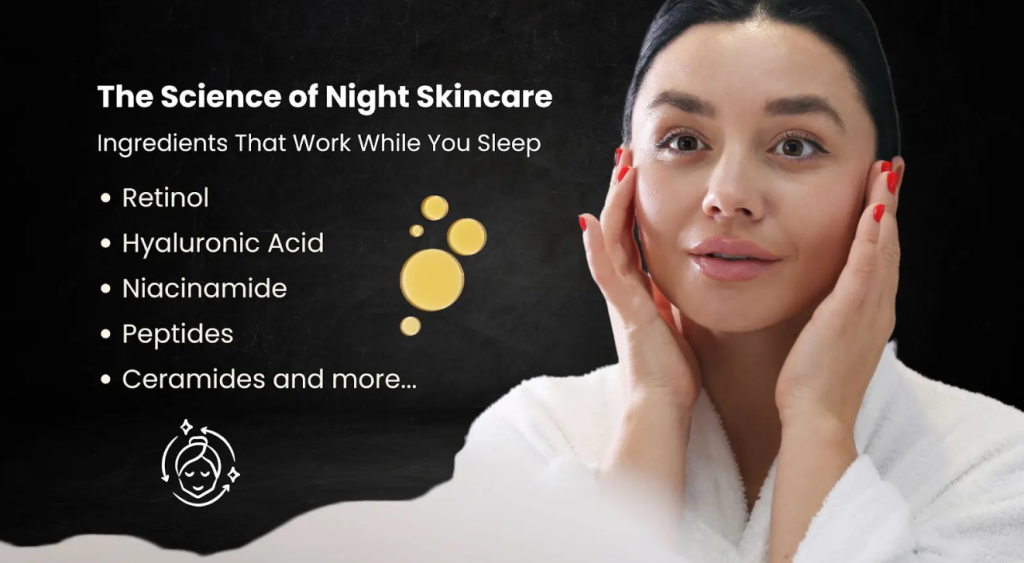
Skincare isn’t just about what you apply; it’s also about when you apply it. At night, your skin enters its most active repair and regeneration phase, making it the perfect time to nourish and restore it with the right ingredients. While you sleep, your skin undergoes cellular turnover, collagen synthesis, and hydration balance restoration—all crucial for maintaining a youthful, healthy complexion.
But not all skincare ingredients work equally well at night. Some are more effective when they have uninterrupted hours to absorb and work deep within the skin. Understanding the science behind night skincare will help you choose the best ingredients for a transformative nighttime routine.
Table of Contents
The Science Behind Nighttime Skin Regeneration
Your body follows a circadian rhythm, and your skin does too. During the day, your skin works as a protective barrier against external aggressors like UV rays, pollution, and bacteria. But at night, it shifts its focus to recovery and repair:
- Increased Cell Turnover: Old, damaged skin cells are shed and replaced with fresh, new ones.
- Collagen and Elastin Production: These structural proteins are synthesized at a higher rate, helping to maintain firmness and elasticity.
- Enhanced Absorption of Active Ingredients: With no exposure to environmental stressors, the skin becomes more permeable, making nighttime the best period for applying potent skincare ingredients.
- Peak Hydration Loss: Your skin loses moisture while you sleep due to decreased oil production, which is why hydration is crucial in a night skincare routine.
Given this natural nighttime repair process, using the right skincare ingredients can accelerate rejuvenation and target concerns like wrinkles, dark spots, and dullness.
Powerful Night Skincare Ingredients
1. Retinol – The Anti-Aging Powerhouse
Retinol is one of the most researched and effective ingredients for night skincare. It stimulates collagen production, accelerates cell turnover, and reduces fine lines, wrinkles, and dark spots. If you’re new to retinol, starting with a low-concentration retinol is a gentle way to introduce it to your skin while minimizing dryness and irritation.
How It Works:
Retinol binds to retinoid receptors in the skin, which enhances cell renewal and repairs sun damage. It also boosts collagen synthesis, improving skin elasticity and texture.
Benefits:
- Reduces fine lines and wrinkles
- Improves skin texture and tone
- Fades hyperpigmentation and dark spots
Best Use:
For beginners, a gentle retinol night cream is the perfect way to introduce retinol into your routine. This cream provides the benefits of retinol without excessive dryness or irritation, making it suitable for first-time users.
For advanced users looking for higher potency, a 2% retinol serum delivers powerful anti-aging benefits and deep skin renewal. This is ideal for those who have already built a tolerance to retinol and are looking for enhanced collagen production and faster skin regeneration.
2. Hyaluronic Acid – The Ultimate Hydrator
Hyaluronic acid is a humectant that draws moisture into the skin, helping it retain hydration throughout the night.
How It Works:
It penetrates the skin’s surface, plumping it from within and reducing the appearance of fine lines and wrinkles.
Benefits:
- Intensely hydrates the skin
- Reduces the appearance of fine lines
- Improves skin elasticity
Best Use:
Apply hyaluronic acid on damp skin after cleansing. Follow with a rich moisturizer to lock in the hydration. Hyaluronic acid works well with most other ingredients and is suitable for all skin types, including sensitive skin.
3. Niacinamide (Vitamin B3) – The Multi-Tasking Skin Soother
Niacinamide is known for its ability to improve skin texture, reduce inflammation, and strengthen the skin barrier.
How It Works:
Niacinamide regulates oil production, reduces redness, and minimizes the appearance of pores. It also boosts the production of ceramides, which enhance the skin’s moisture barrier.
Benefits:
- Balances sebum production
- Strengthens the skin’s protective barrier
Best Use:
Use niacinamide after cleansing and before heavier treatments like retinol or moisturizers. It pairs well with most ingredients, including hyaluronic acid and peptides, making it a versatile addition to your night routine.
4. Peptides – The Building Blocks of Skin
Peptides are short chains of amino acids that signal the skin to produce more collagen and elastin.
How It Works:
Peptides penetrate the skin and act as messengers, encouraging the body to repair and rebuild damaged tissue. This results in firmer, smoother skin over time.
Benefits:
- Boosts collagen and elastin production
- Improves skin firmness and elasticity
- Reduces the appearance of fine lines and wrinkles
Best Use:
Look for peptide-rich night creams or serums. Apply them after cleansing and allow them to absorb fully before using a moisturizer.
5. Ceramides – The Skin Barrier Protectors
Ceramides are lipids (fats) that form the protective barrier of the skin, preventing moisture loss and shielding against environmental damage.
How It Works:
Ceramides fill the gaps between skin cells, creating a smooth and resilient barrier that locks in hydration and prevents irritants from penetrating the skin.
Skin Benefits:
- Strengthens the skin’s protective barrier
- Prevents moisture loss
- Reduces dryness
Best Use:
Ceramides are suitable for all skin types, including sensitive and dry skin.
6. Alpha Hydroxy Acids (AHAs) and Beta Hydroxy Acids (BHAs) – The Exfoliating Heroes
AHAs (like glycolic acid and lactic acid) and BHAs (like salicylic acid) are chemical exfoliants that remove dead skin cells and unclog pores.
How They Work:
- AHAs work on the skin’s surface, improving texture and radiance.
- BHAs penetrate deep into the pores, dissolving excess sebum and preventing breakouts.
Skin Benefits:
- Improves skin texture and tone
- Reduces acne and clogged pores
- Enhances the effectiveness of other skincare ingredients
Best Use:
Use them 2–3 times a week after cleansing. Start with a low concentration (2%–4% for AHAs, 1%–2% for BHAs) and increase gradually. Follow up with a hydrating moisturizer to prevent dryness.
The Best Night Skincare Routine
To maximize the benefits of these ingredients, follow a structured nighttime skincare routine:
- Cleanse – Use a gentle, sulfate-free cleanser to remove dirt, oil, and makeup.
- Treat – Follow with a serum that has active ingredients like retinol, niacinamide, or based on your skin’s needs.
- Moisturize – Lock in moisture with a cream rich in ceramides or fatty acids.
Tips for Better Night Skincare Results
- Be Consistent – Skin repair and improvement take time; stick to your routine for at least 4–6 weeks.
- Avoid Overloading – Don’t combine too many active ingredients at once; this can irritate your skin.
- Patch Test New Products – Test new products on a small area of skin to avoid potential reactions.
- Stay Hydrated – Drinking water throughout the day supports overall skin health.
Conclusion
Your skin’s natural repair process peaks at night, making your nighttime skincare routine essential for maintaining healthy, glowing skin. By incorporating ingredients like retinol, hyaluronic acid, peptides, and ceramides into your routine, you can support your skin’s regeneration process and wake up with a refreshed, radiant complexion. With a little consistency and the right products, your nighttime routine can transform your skin while you sleep.
About the Author –
Dr. Prashant Agrawal, a renowned dermatologist, hair transplant surgeon, and co-founder of SkinInspired, is an expert in advanced skincare and anti-aging treatments. With a deep understanding of nighttime skin regeneration, he advocates the use of science-backed ingredients like retinol for optimal results. SkinInspired’s best-selling Retinol Night Cream, ideal for beginners, along with other dermatologist-approved products, helps support skin renewal while you sleep.
